
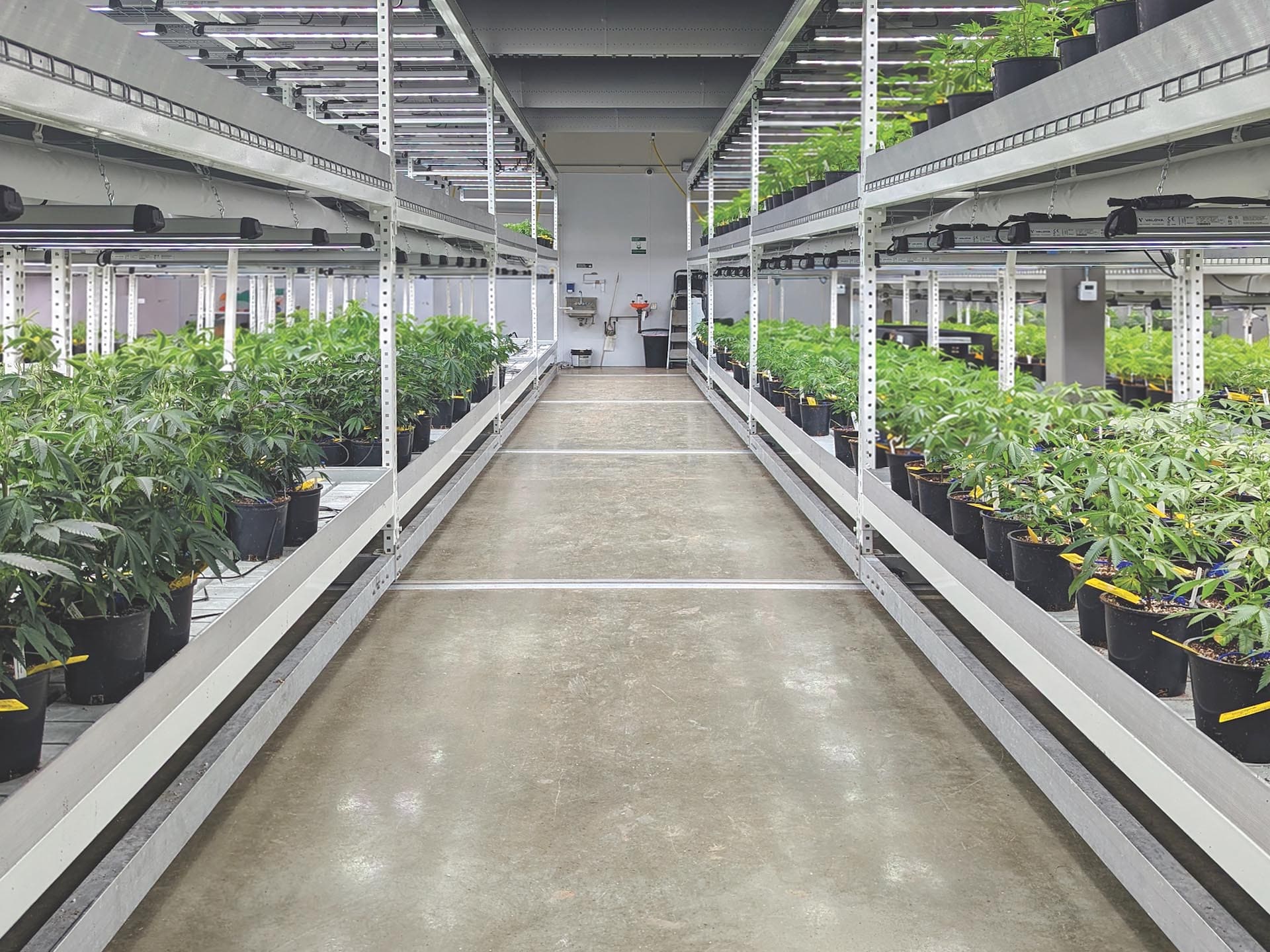
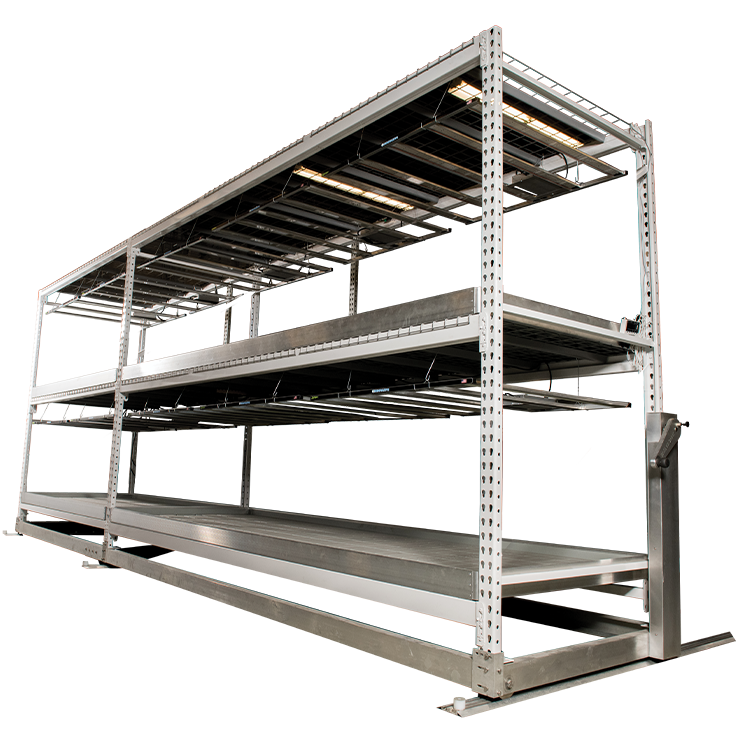
Commercial Vertical Grow Racks for Cannabis Cultivation
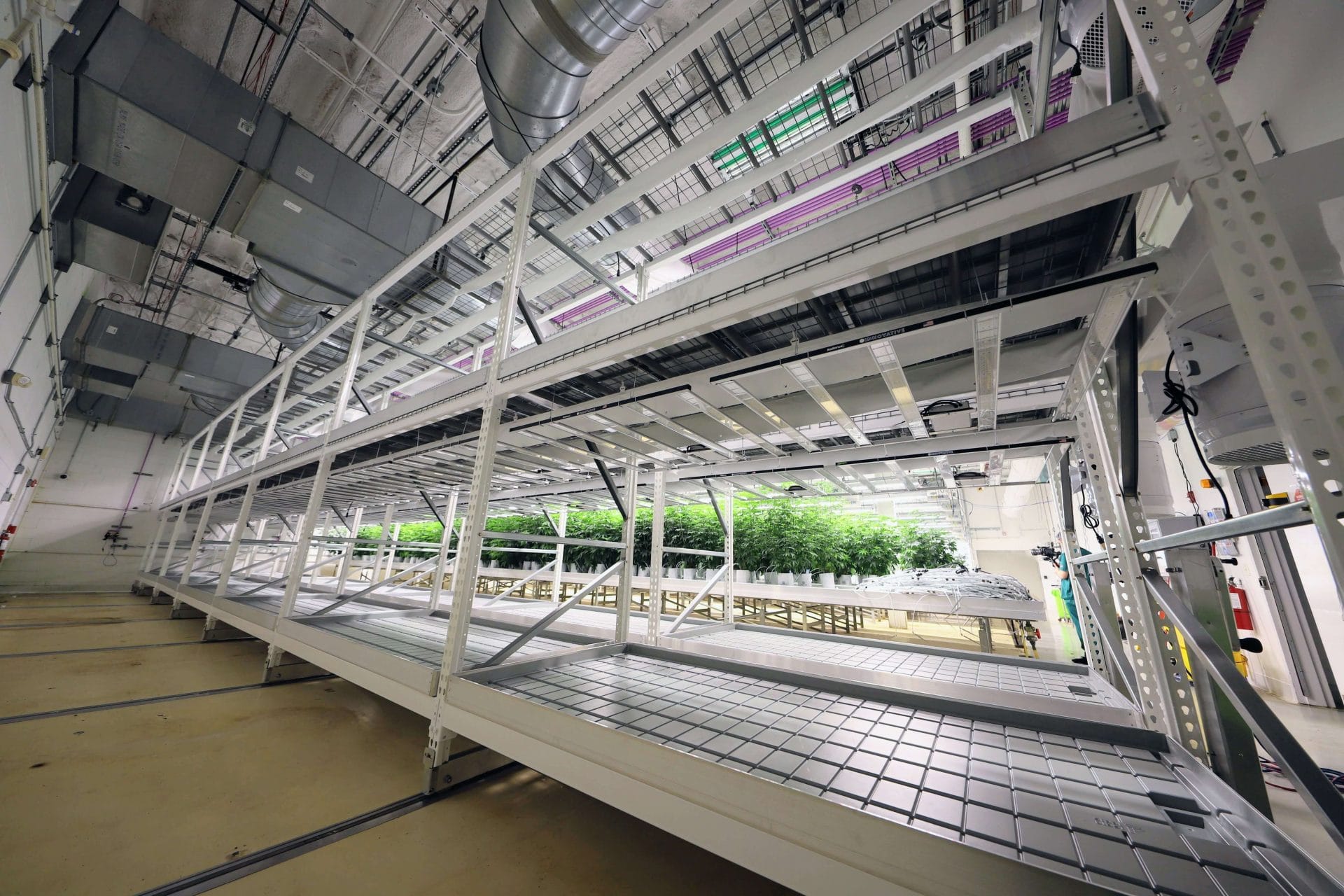
Engineered and fabricated in-house in Sycamore, Illinois, CM Horticulture’s multi-tier vertical grow racks transform single-level grow rooms into high-density, multi-story production environments. Built for commercial cultivators who demand zero structural deflection, smooth mechanical-assist mobility, and factory-direct engineering support, our systems double or triple your usable canopy without expanding your facility footprint.
Strength
Heavy-gauge structural steel and aircraft-grade aluminum frames rated for 1,500+ lbs per linear foot with zero lateral sway.
Mobile Rows
High-ratio mechanical-assist hand cranks glide 40–80 ft loaded rows effortlessly, recovering up to 45% more canopy space.
Wheels
Precision-machined stainless steel wheels roll smoothly along flush floor tracks with integrated overhead anti-tip guides.
Hardware
Corrosion-resistant stainless fasteners and modular bolt-together brackets designed for fast installation and seismic compliance.
Direct-from-factory OEM fabrication in Sycamore, IL — custom-engineered to your exact room dimensions and load requirements.
Use Vertical Space to Increase Canopy Capacity
Traditional grow layouts leave valuable vertical space untapped. With a properly designed vertical grow system, that wasted air becomes one of your most valuable assets.
By utilizing a single mobile aisle per room, you can eliminate unnecessary walkways while still maintaining full access to your crop. While cannabis grow benches are effective for single-tier cultivation, vertical grow rack systems use cubic space instead of relying on floor space alone. This allows cultivators to increase canopy density and plant capacity within the same facility footprint.
Vertical grow rack systems are most effective when integrated with the appropriate grow lighting systems, irrigation, and airflow systems to support consistent conditions across every canopy level. A properly designed system considers not only the rack structure, but how lighting, water delivery, airflow, plant spacing, and access work together across each tier.
The amount of additional canopy a facility can support depends on its room dimensions, tier count, aisle configuration, plant spacing, and system requirements. Use the Vertical Rack Room Generator to compare layout options and estimate how much canopy your space could support.
Benefits of Commercial Vertical Grow Racks:
- Double or Triple Usable Canopy: Stack 2, 3, or 4 tiers vertically without expanding your building footprint.
- Eliminate Wasted Aisles: Mechanical-assist mobile carriages condense static walkways into productive growing space.
- Integrated Catwalks & Airflow: Built-in frame chaseways support under-canopy ducting and OSHA-compliant upper walkways.
- Factory-Direct OEM Pricing: Engineered and fabricated in-house in Illinois with zero middleman distributor markups.
Case Study
Michigan Flower Room Retrofit
A three-tier rack layout provides 3× the flowering canopy of benching in the same 1,296 sq. ft. floor footprint.
1,296
sq. ft. benching canopy
3,888
sq. ft. racking canopy
3×
the canopy in the same floor footprint
The layout
More flowering canopy within the same footprint.
The benching layout provides 1,296 sq. ft. of flowering canopy. The three-tier rack layout provides 3,888 sq. ft. in the same 1,296 sq. ft. floor footprint.
Canopy area · 1,296 sq. ft. floor footprint
3× the flowering canopy in the same floor footprint
01 · FOOTPRINT
Same floor area
Both layouts use a 1,296 sq. ft. floor footprint.
02 · LAYOUT
One tier to three
Benching provides 1,296 sq. ft. of canopy; racking provides 3,888 sq. ft.
03 · YIELD
50 g per sq. ft.
Yield is calculated from canopy area at 50 g/sq. ft. per harvest.
See the layout comparison and yield
Canopy and layout
| Project measure | Benching | Racking |
|---|---|---|
| Floor footprint | 1,296 sq. ft. | 1,296 sq. ft. |
| Growing tiers | 1 | 3 |
| Flowering canopy | 1,296 sq. ft. | 3,888 sq. ft. |
| Yield per canopy sq. ft. | 50 g per harvest | 50 g per harvest |
| Total yield per harvest | 64.8 kg | 194.4 kg |
Yield per harvest
Benching: 50 g/sq. ft. × 1,296 sq. ft. = 64.8 kg
Racking: 50 g/sq. ft. × 3,888 sq. ft. = 194.4 kg
3× the canopy. 3× the total yield per harvest.
Supporting Consistent Conditions Across Every Tier
Multi-tier cultivation requires uniform VPD and safe upper-level access. CM Horticulture frames feature dedicated under-tray mounting channels for laminar airflow fans, vertical HVAC duct drops, and irrigation manifolds—plus optional OSHA-compliant integrated catwalks and guardrails for ergonomic top-tier harvesting
Plan a Vertical Grow Rack Around Your Facility
The right rack configuration depends on your room, crop, workflow, and the systems that support each tier. CM Horticulture designs fixed and mobile vertical grow racks for commercial cannabis facilities.
Choose fixed or mobile
Mobile systems create a working aisle where it’s needed. Fixed racks keep access points in consistent locations. The right setup depends on your room layout, equipment, and daily workflow.
Set the height and layout
CM systems can be configured from 8 to 24 feet high, using 8-, 10-, or 12-foot rack sections. Sections can be up to 6 feet wide, and mobile rows can be up to 70 feet long. Final dimensions depend on your facility and project requirements.
Vertical Grow Rack Configurations
CM Horticulture can also adapt rack heights, section lengths, tier spacing, and mechanical-assist options around the room and cultivation application.
Configurations may support flowering, vegetative growth, or other production stages depending on plant height, lighting clearance, irrigation, airflow, and operating workflow. Taller multi-tier configurations may also require integrated catwalk systems to provide safe and efficient access to upper canopy levels.


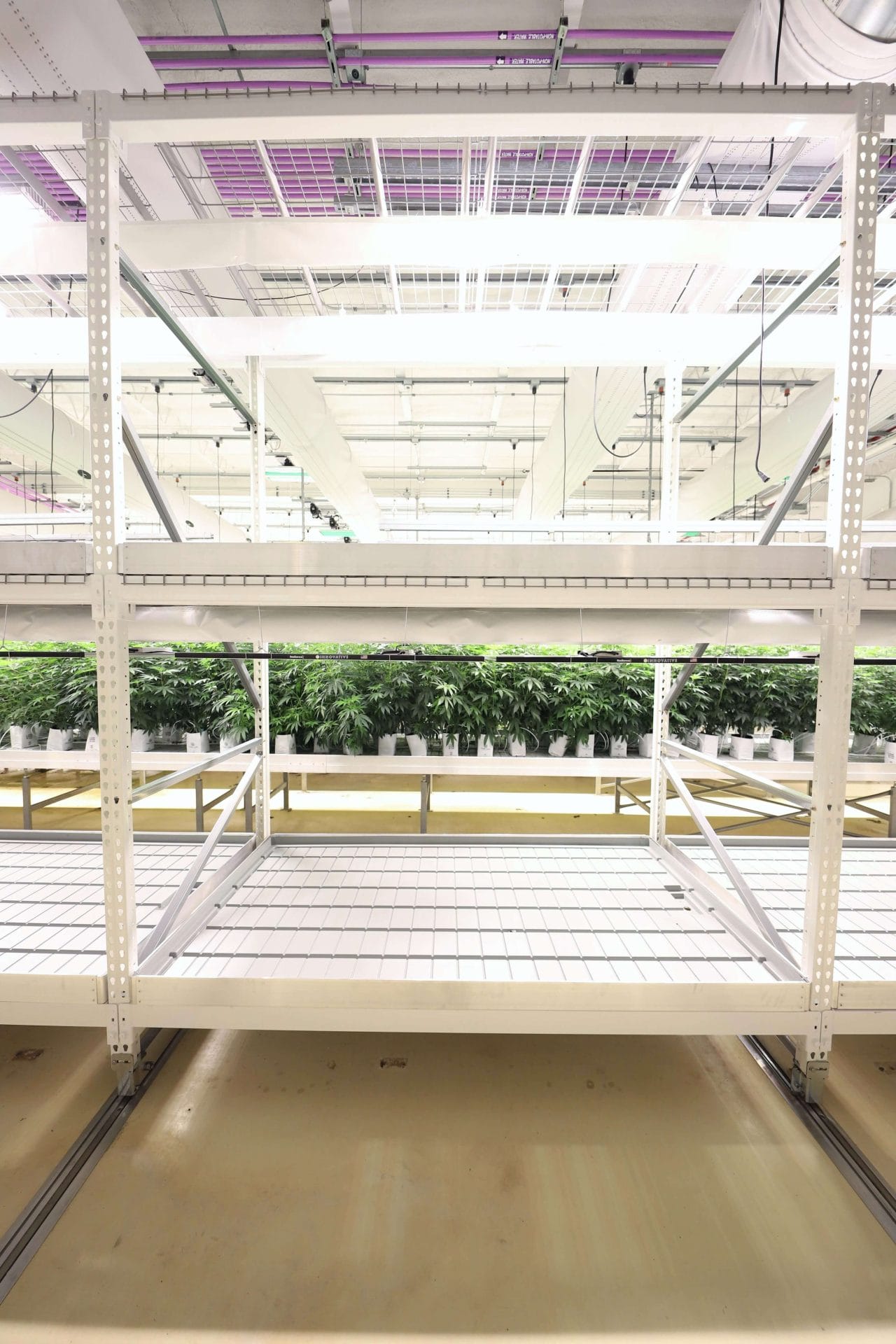
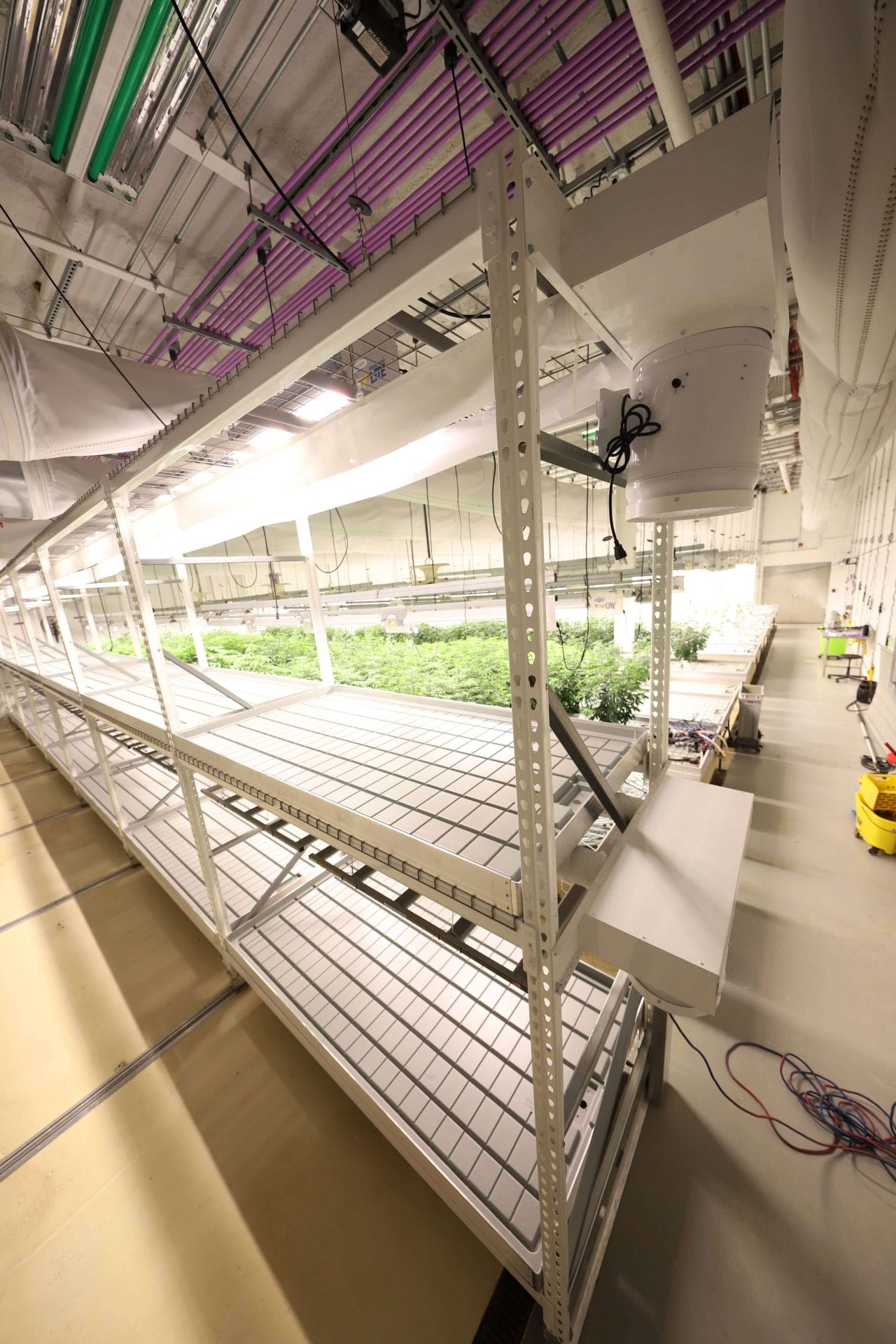




Click Image to Enlarge Images
Looking for Mobile Racks for Propagation or Research?
CM Horticulture also offers compact mobile grow racks for propagation, cloning, seedlings, research, and controlled environment applications. Available in 2-, 3-, and 4-tier configurations, these systems serve a different purpose than facility-scale vertical cultivation racks.
