
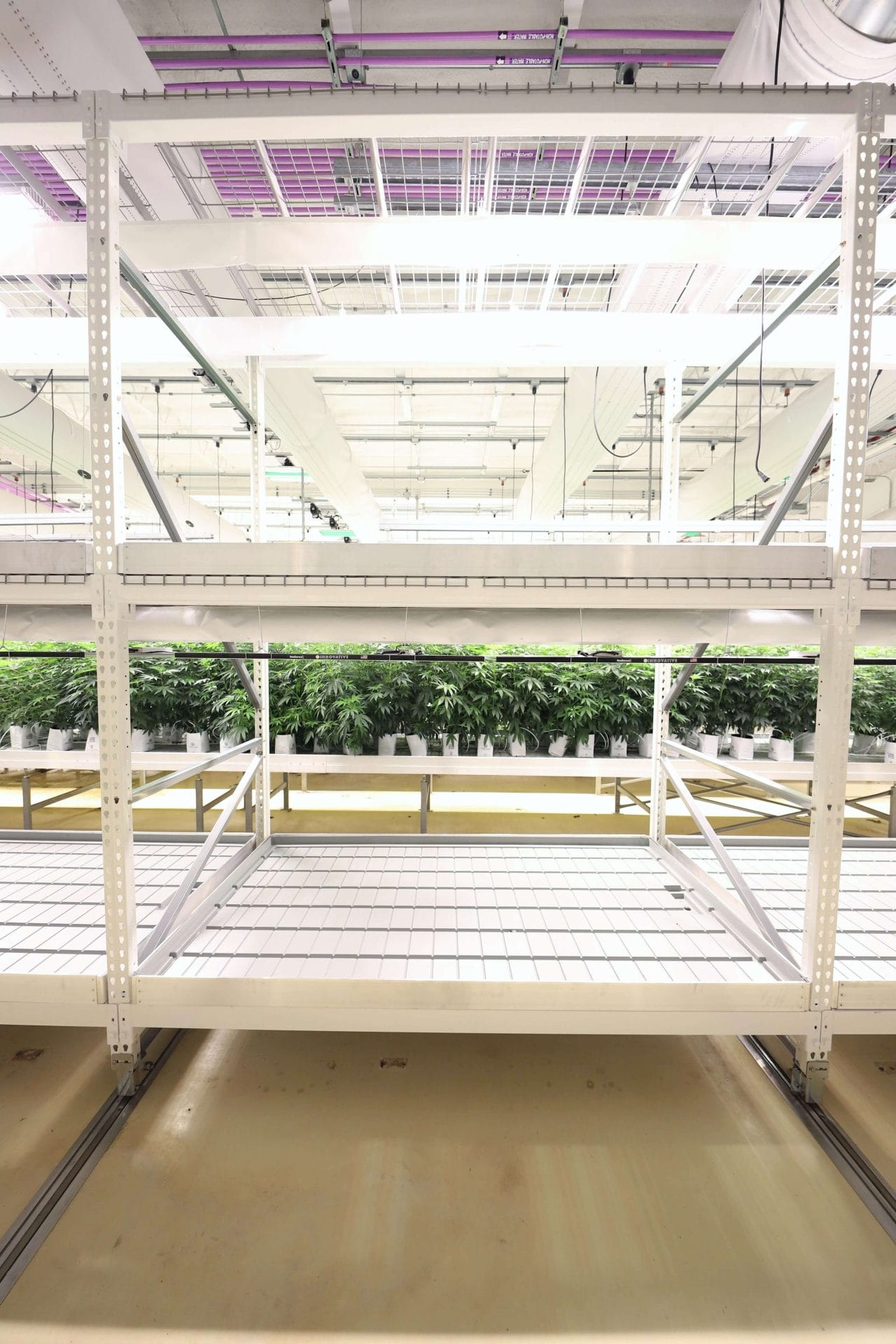
When evaluating vertical grow systems, most operators focus on layout, pricing, and projected capacity. What often gets overlooked are the vertical grow racks pitfalls that only show up after the system has been in use for a year or more.
These issues do not appear in sales presentations or installation timelines. They show up later through inconsistent yields, increased maintenance, and workflow inefficiencies that quietly impact your bottom line.
If you are planning an investment in vertical infrastructure, understanding these vertical grow racks pitfalls can help you avoid expensive mistakes.
1. Choosing Price Over Structural Integrity
One of the most common vertical grow racks pitfalls is prioritizing upfront cost over long-term durability.
Lower-cost systems often reduce steel thickness or simplify structural support. While that may not be obvious during installation, it becomes clear over time as racks begin to flex under load. Even minor structural movement can affect alignment, irrigation consistency, and overall system reliability.
In a commercial cannabis facility, those small issues quickly translate into higher maintenance costs and lost production.
2. Treating Irrigation as an Afterthought
Another major vertical grow racks pitfall is failing to integrate irrigation into the rack design from the beginning.
Vertical systems rely on consistent water delivery across multiple tiers. If irrigation lines are added after the fact, growers often deal with uneven distribution, difficult maintenance access, and excess runoff.
A properly designed system considers irrigation routing, pressure balance, and drainage from day one. Anything less creates inefficiencies that compound over every cycle.
3. Ignoring Workflow and Labor Efficiency
Workflow is one of the most underestimated vertical grow racks pitfalls.
If your team has to constantly adjust positions, reach awkwardly, or navigate around poorly designed layouts, labor costs increase without anyone noticing right away. Over time, those inefficiencies slow down key processes like pruning, inspection, and harvest.
The best vertical rack systems are designed not only for plant density, but also for how people move through the space.
4. Overlooking Airflow Between Tiers
Airflow issues are a critical vertical grow racks pitfall that directly impacts yield.
In vertical environments, poor airflow between tiers creates uneven growing conditions. Some plants receive consistent air movement, while others sit in stagnant pockets. This often leads to inconsistent development and underperformance, especially on upper levels.
Airflow should be considered part of the rack design, not just the HVAC plan. If racks restrict movement of air, the entire system suffers.
5. Assuming All Warranties Offer Equal Protection
A final vertical grow racks pitfall is assuming that a warranty guarantees long-term reliability.
Not all warranties cover the same components, and not all manufacturers can respond quickly when issues arise. Delays in replacement parts or service can disrupt entire grow cycles.
It is important to understand what is covered, how support is handled, and what happens after the initial warranty period ends.
Final Thoughts
Vertical systems can significantly increase production capacity, but only if they are designed and implemented correctly.
The most costly vertical grow racks pitfalls are the ones that go unnoticed during the buying process. By focusing on structural integrity, integrated systems, airflow, and real-world workflow, growers can make smarter decisions that pay off over time.
Taking the time to evaluate these factors upfront can prevent months or even years of operational challenges.
LinkedIn Version
Most vertical grow racks pitfalls do not show up during install.
They show up a year later when maintenance increases and yields become inconsistent.
Here are five we see often in commercial facilities:
• Choosing price over durability
• Treating irrigation as an afterthought
• Ignoring workflow and labor efficiency
• Overlooking airflow between tiers
• Assuming warranties mean protection
The real cost of a rack system is not the quote. It is how it performs over time.