
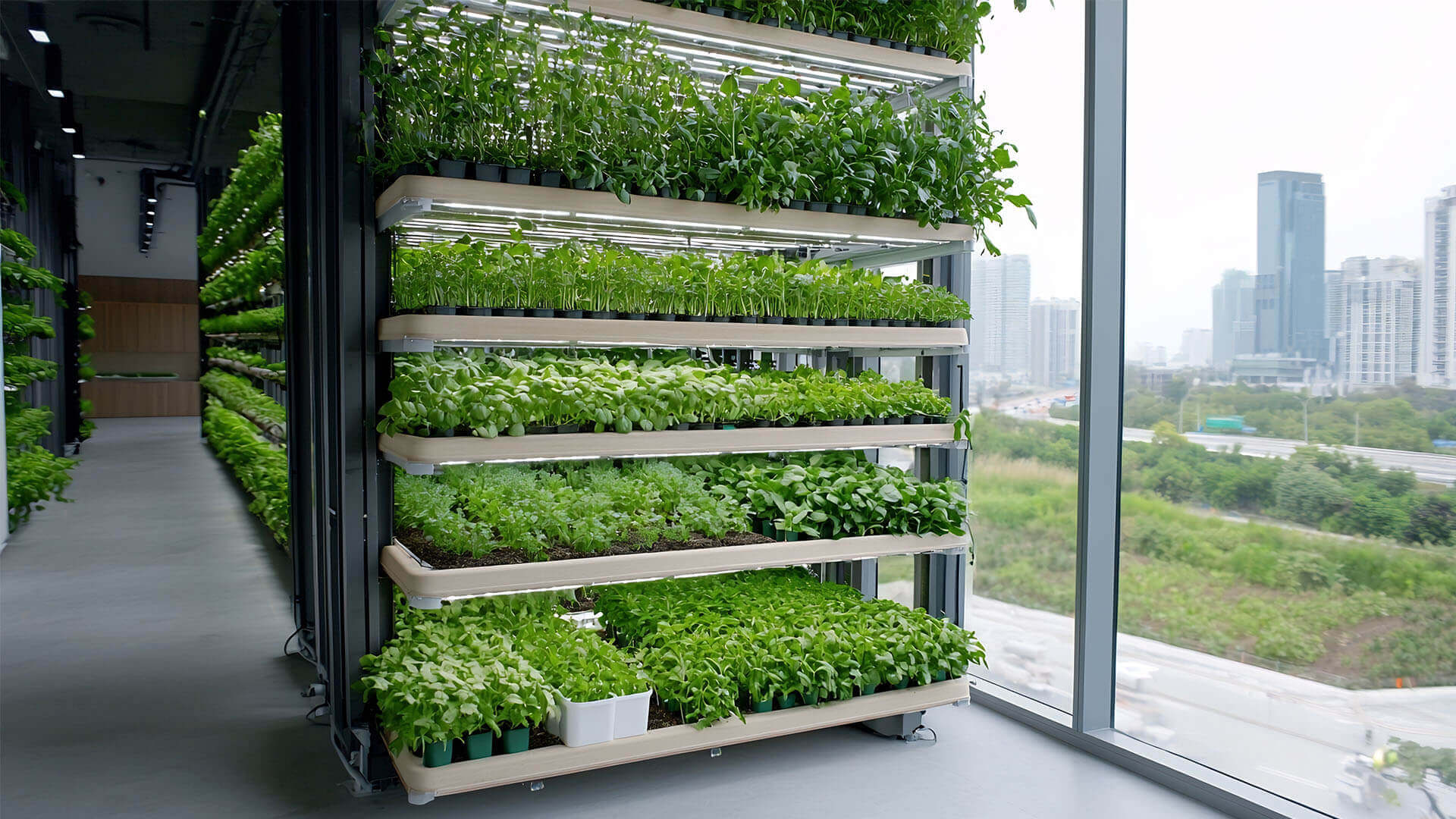
When operators evaluate a cultivation facility, they often focus on total square footage. But square footage alone doesn’t generate revenue. Plants do.
The real metric that separates average facilities from highly efficient operations is usable canopy percentage—the proportion of the facility actively producing crop versus the space consumed by aisles, fixed infrastructure, and inefficient workflow design.
Grow facility space optimization is one of the most overlooked drivers of cultivation profitability. While many operators focus on increasing production through genetics, lighting, or environmental controls, the physical layout of the facility often presents the greatest opportunity for improvement. By reducing wasted space, improving workflow efficiency, and maximizing usable canopy, growers can increase output and revenue without expanding their facility footprint.
In many facilities, profitability isn’t being lost because yields are too low. It’s being lost because too much of the building isn’t growing anything.
Why Empty Space Is So Expensive
Every square foot in a cultivation facility carries costs:
- Rent or mortgage
- HVAC capacity
- Lighting infrastructure
- Irrigation systems
- Labor
- Utilities
- Compliance and operational overhead
Whether a space contains plants or not, those costs remain.
If 30–40% of a flowering room is dedicated to permanent aisles and inaccessible corners, operators are effectively paying premium cultivation costs for areas that generate zero revenue.
A 20,000-square-foot facility may sound impressive on paper, but if only 12,000 square feet are productive canopy, the operation is actually performing like a much smaller facility.
The Hidden Cost of Traditional Layouts
Many cultivation rooms are designed with convenience in mind rather than production efficiency.
Common issues include:
Excessive Fixed Aisles
Permanent walkways often remain unused for most of the crop cycle but consume valuable cultivation space year-round.
Poor Bench Placement
Fixed benches create dead zones around walls, corners, and access points, reducing planting density.
Workflow Bottlenecks
Teams spend unnecessary time:
- Walking long distances
- Moving carts around obstacles
- Accessing plants from multiple sides
- Transporting materials inefficiently
These labor inefficiencies compound over every harvest cycle.
Underutilized Vertical and Horizontal Space
Many facilities never optimize spacing based on actual crop requirements, leaving productive area unrealized.
The Revenue Impact
Consider a simplified example:
Facility A
- 10,000 sq ft flower room
- 65% canopy utilization
- 6,500 sq ft productive canopy
Facility B
- Same room size
- 85% canopy utilization
- 8,500 sq ft productive canopy
That’s a 2,000 sq ft difference in productive area without expanding the building.
If each square foot generates even modest annual crop revenue, the increase can represent hundreds of thousands—or millions—of dollars over time.
The building footprint never changed.
The layout did.
Why Rolling Benches Change the Equation
Rolling bench systems are designed around a simple concept:
Aisles should exist only when workers need them.
Instead of maintaining multiple permanent walkways, benches move laterally to create a single active working aisle.
Benefits include:
Increased Canopy Density
More of the room becomes dedicated to plant production rather than access space.
Better Space Utilization
Operators can often increase canopy percentage substantially without building expansion.
Improved Workflow
Workers access any section of the room quickly by opening an aisle where needed.
Reduced Expansion Costs
Before investing in additional real estate, many facilities can unlock meaningful production gains within their existing footprint.
Mobile Systems Create Operational Efficiency
The conversation shouldn’t focus solely on maximizing plant count.
Efficient layouts also improve:
- Harvest workflows
- Scouting and IPM access
- Irrigation management
- Cleaning procedures
- Labor productivity
When facility design supports movement instead of obstructing it, labor hours decline while output increases.
For large-scale operators, labor savings often become just as valuable as canopy gains.
The most profitable cultivation facilities don’t necessarily have the largest buildings—they simply make better use of the space they already have. Through strategic grow facility space optimization, operators can unlock additional canopy, improve labor efficiency, and increase profitability without the significant capital expense of facility expansion.